Dispatch Results (Interim Report)
Hanaoka Group Designated Assistant Professor
Specially Appointed Assistant Professor Hisashi Ohno
Graduate School of Pharmaceutical Sciences, Keio University
Host Institution: HHMI Janelia Research Campus (Lavis lab)
Period of Stay: April 2025 – March 2027 (Expected)
Research Theme: Development of fluorogenic probes for Adenosine A2A Receptor
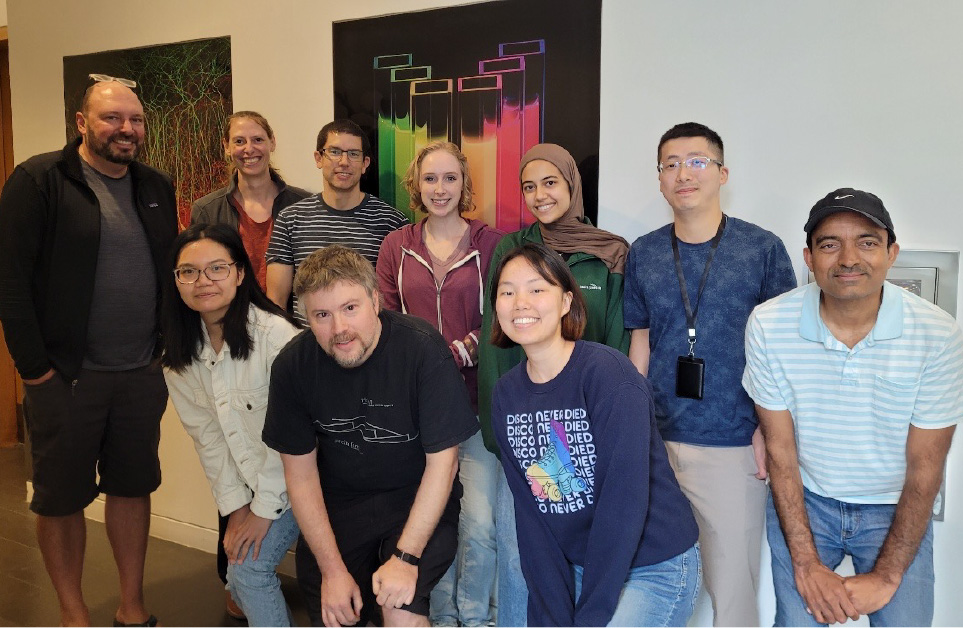
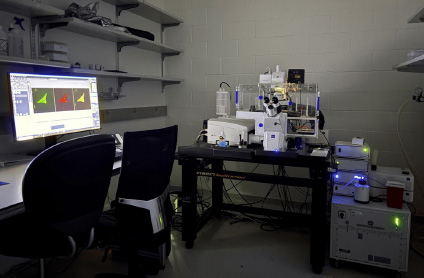
Since April 2025, I have been conducting research as a visiting scientist in Dr. Luke Lavis’s laboratory at the Howard Hughes Medical Institute (HHMI) Janelia Research Campus in Virginia, USA. Using the fluorescence-control method developed in the Hanaoka Laboratory, I am working to develop new fluorogenic probes for visualizing the adenosine A2A receptor (A2AR), which is highly expressed in neurons. This work combines my prior experience with the Lavis Lab’s advanced molecular modification strategies designed to enhance fluorophore brightness.
A2AR is a well-established therapeutic target for Parkinson’s disease, and several antagonists targeting this receptor are already used clinically. Recent studies further suggest that A2AR plays a significant role in oxidative stress responses in neurons, although the precise mechanisms remain insufficiently understood. Meanwhile, methods for directly visualizing A2AR in living cells remain limited. Thus, the development of new imaging tools is essential for advancing our understanding of the relationship between its physiological and pathological functions and the oxidative stress.
To address this challenge, I am developing fluorogenic probes that emit fluorescence only upon binding to A2AR. These probes utilize the phenyl-induced twisted intramolecular charge transfer (p-TICT) mechanism, a fluorescence-control strategy established in the Hanaoka Laboratory. To date, I have developed green and red fluorogenic probes for A2AR and have successfully performed the live-cell imaging of A2AR expressed on the plasma membrane of cultured cells. I am currently synthesizing near-infrared derivatives suitable for deep-tissue imaging, with the goal of extending these studies to in vivo applications, including evaluation using mouse models.
At Janelia Research Campus, researchers from diverse scientific backgrounds—particularly in neuroscience—collaborate extensively and engage in active interdisciplinary discussions. Through daily meetings and informal exchanges, I receive valuable feedbacks from multiple perspectives, enabling me to refine my research approach and identify new directions. This environment has been highly stimulating and instrumental in advancing my work.
I am deeply grateful for the opportunity to pursue this research in this cutting-edge research environment as part of G-ReXS.
Akaike Group Assistant Professor
Assistant Professor, Seiryo Ogata
Affiliation: Environmental Medicine and Molecular Toxicology, Tohoku University Graduate School of Medicine (Akaike Lab)
Host Institution: Max Planck Institute for Polymer Research, Mainz, Germany
Host Research Group: Uladzimir Barayeu (Group leader)
Period: June 1, 2025 - March 31, 2026
Research Project: Elucidation of the mechanism of protein persulfidation
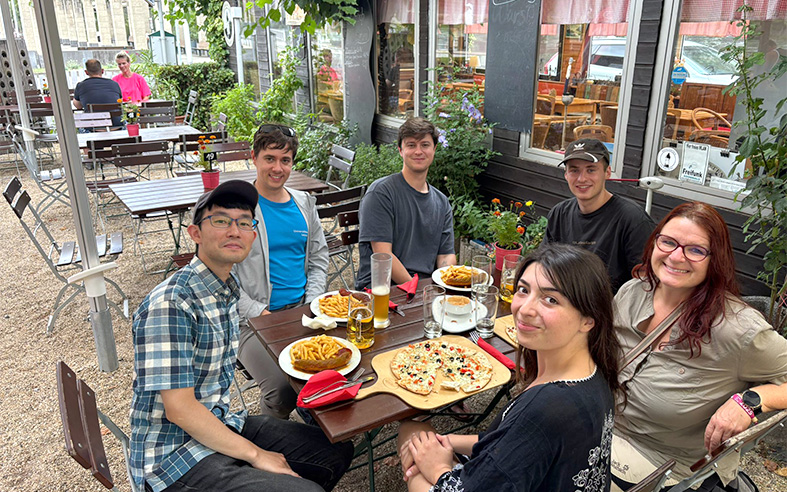
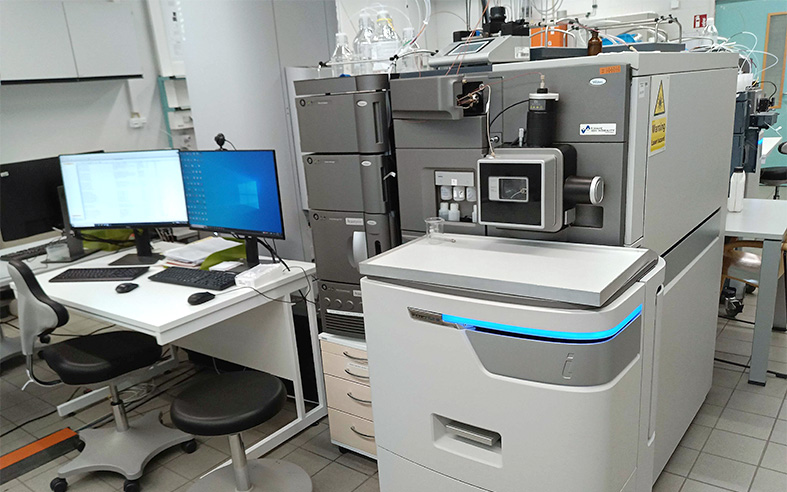
Since June 2025, I have been conducting research at the Max Planck Institute for Polymer Research in Mainz, Germany, under the supervision of Dr. Uladzimir Barayeu. In this laboratory, I am continuing the work initiated in the Akaike Lab at Tohoku University on supersulfides. Utilizing mass spectrometry techniques, I am analyzing low-molecular-weight sulfur metabolites and developing methods for investigating sulfur modifications in proteins. At present, my research focuses on elucidating the mechanism of protein persulfidation during translation, mediated by cysteinyl-tRNA synthetase (CARS), a key enzyme in persulfide biosynthesis.
In addition, I have begun collaborative projects with researchers across Europe in the field of redox biology, applying mass spectrometry-based approaches to the study of supersulfides. These collaborations, involving scientists from diverse research backgrounds, have provided new insights and potential applications for sulfur biology, offering daily intellectual stimulation and broadening the scope of my work. Recently, I have also started a collaboration with Frauke Gräter, the director of my host institute, to analyze Dopa and related protein modifications using mass spectrometry. Given the strong expertise in molecular simulations within the institute, I anticipate that combining mass spectrometry with computational approaches will yield novel findings in the near future.
Within the institute, I am impressed by the open and active exchange of ideas, regardless of age or position. Daily meetings and discussions provide valuable stimulation, and the vibrant interactions across research groups naturally foster collaborative projects, creating an environment that greatly expands research opportunities.
Building upon the mass spectrometry expertise, I aim to further advance my research during this stay. I am committed to making the most of this invaluable opportunity provided through International Leading Research and will continue to devote myself to my work with diligence and enthusiasm.
Akaike Group Physician
Affiliation: Department of Hematology, Tohoku University Hospital
Research Period: April 2025 – September 2025
Host Institution: Helmholtz Munich, Institute of Metabolism and Cell Death (Prof. Marcus Conrad’s Laboratory)
Research Theme: Development of Novel Cancer Therapies through Ferroptosis Induction
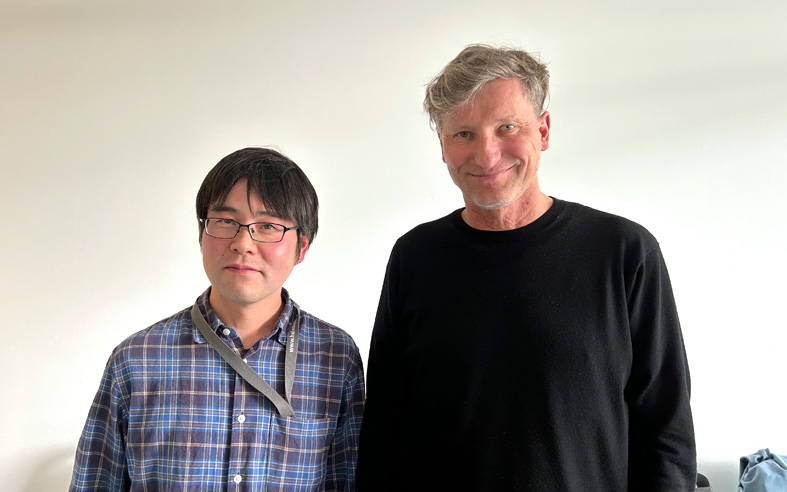
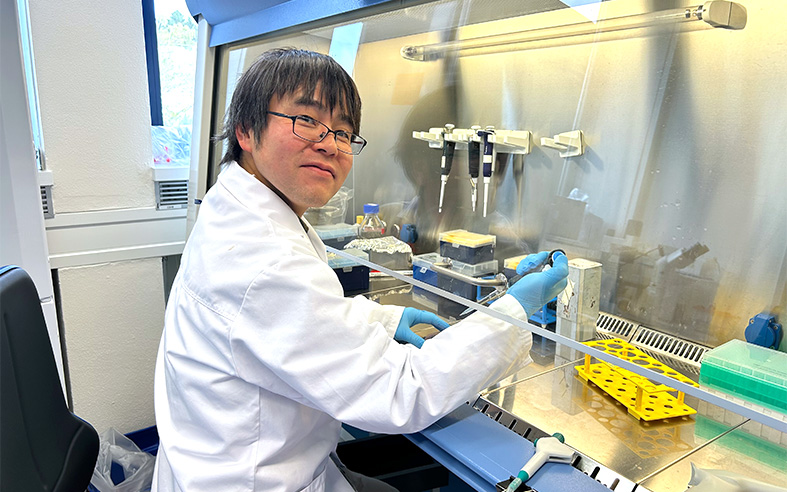
Recent studies have revealed that regulated cell death includes several forms that apparently differ from apoptosis in terms of molecular mechanisms and morphological characteristics. Among these, ferroptosis—an iron-dependent, lipid peroxidation–driven cell death—has gained significant global attention due to its involvement in neurodegenerative disorders, acute organ injuries, and cancer drug sensitivity.
Prof. Marcus Conrad is a leading authority in the field of ferroptosis and redox biology. His laboratory pioneered the discovery of the essential regulators of ferroptosis, including GPX4, ACSL4, and FSP1, establishing a global foundation for research in this area.
While major components of ferroptosis regulation have been elucidated, its physiological roles, contributions to disease processes, and potential therapeutic applications remain incompletely understood. Under Prof. Conrad’s supervision, I conducted research based on the hypothesis that enhancing ferroptosis sensitivity in cancer cells could represent a new therapeutic approach.
Pharmacological inhibition of GPX4 is considered the most direct method to induce ferroptosis in cancer cells; however, due to structural constraints of GPX4, developing clinically applicable inhibitors has been challenging. In contrast, FSP1, identified as a second, GPX4-independent ferroptosis defense axis, has emerged as a promising therapeutic target for refractory cancers.
During this research period, I advanced the development of novel therapeutic tools targeting FSP1, in parallel with mechanistic analyses using knockout and knock-in mouse models. Through collaborations with researchers in Germany and abroad, we have also begun to uncover several previously unrecognized molecular pathways that potentially contribute to ferroptosis regulation.
The findings from this work are expected to provide new insights into oxidative stress responses and cell death control and ultimately support future drug-development strategies targeting ferroptosis. Moving forward, I plan to disseminate these results through conference presentations and manuscript preparation, and to strengthen collaborations with Tohoku University and other domestic institutions to promote translation from basic discovery to clinical application.
Akaike Group PhD Student
Taro Yamanashi, Ph.D. candidate (3rd year)
Affiliation: Uozumi Laboratory, Graduate School of Engineering, Tohoku University
Host institution: Department of Plant Sciences, University of Cambridge (Webb Lab)
Period: April 2025 – March 2026
Research topic: Circadian clock-dependent regulation of environmental responses in plants

Since April 2025, I have been conducting research in the Webb Laboratory at the University of Cambridge. The Webb Lab is internationally recognized for its pioneering studies on the plant circadian clock, particularly in linking molecular clock regulation to physiological responses under natural environmental conditions.
During my stay, I have been investigating how the plant circadian clock modulates sensitivity to environmental stimuli in a time-of-day dependent manner. Specifically, I am establishing an experimental system to analyze whether reactive oxygen species (ROS) are rhythmically accumulated and induced under circadian control, and how they contribute to environmental responses in plants.
In parallel, I am also analyzing the involvement of calcium (Ca²⁺) signaling, including the development of transgenic plants expressing Ca²⁺ reporter proteins, to clarify how ROS and Ca²⁺ signals cooperate under circadian regulation to modulate plant responses.
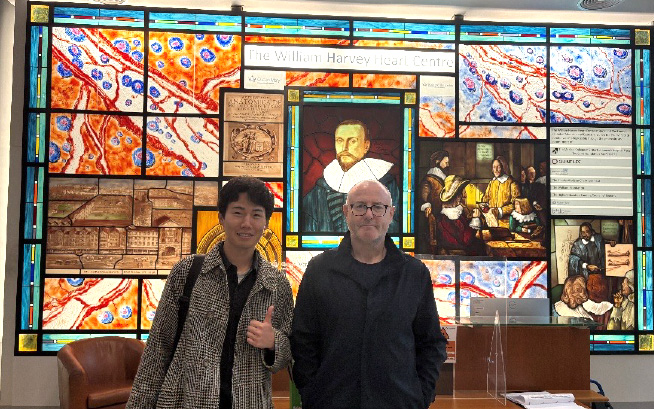
During this period, I had the valuable opportunity to visit Professor Philip Eaton at Queen Mary University of London (QMUL), where I learned about the latest research on redox-dependent signaling in mammals. Discussions with Professor Eaton and his colleagues provided deep insights into how cysteine redox regulation affects mammalian stress responses and disease mechanisms. This experience broadened my perspective and inspired me to re-evaluate ROS signaling in plants from a wider biological context.
In the future, I aim to integrate my findings on circadian regulation, ROS accumulation, and Ca²⁺ signaling to elucidate the common principles and plant-specific mechanisms underlying environmental adaptation. I am deeply grateful for the invaluable opportunity to pursue this research abroad and for the generous support that has made this experience possible.